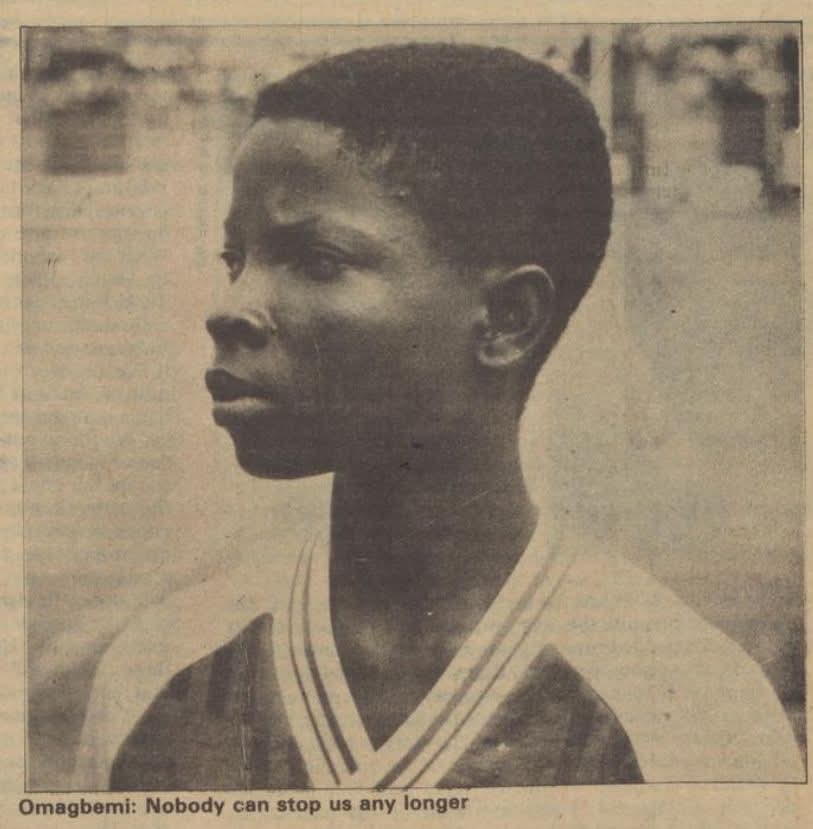
Greatness is not just measured in trophies, it is defined by those who shape its very identity. Few figures embody that truth like Florence Omagbemi, a woman whose journey from commanding the midfield to conquering the continent from the touchline stands as one of the most remarkable legacies in African sport.

She did not just win, she transformed what winning looked like for women in football.
Born on February 2, 1975, in Delta State, Omagbemi’s early years were far removed from the spotlight that would later follow her.

At a time when women’s football in Nigeria was still battling for recognition, she emerged with a rare blend of grit, intelligence, and composure that set her apart.
By the 1990s, she had earned her place in the Nigeria women’s national football team, stepping into what would become a defining era for the team. Operating as a midfielder, she quickly became the engine of the squad, breaking up play, dictating tempo, and leading with quiet authority.

Florence Omagbemi, was barely sixteen years old, when she played for the Super Falcons at the inaugural FIFA Women’s World Cup, China 1991.
The Golden Era and a Captain’s Legacy
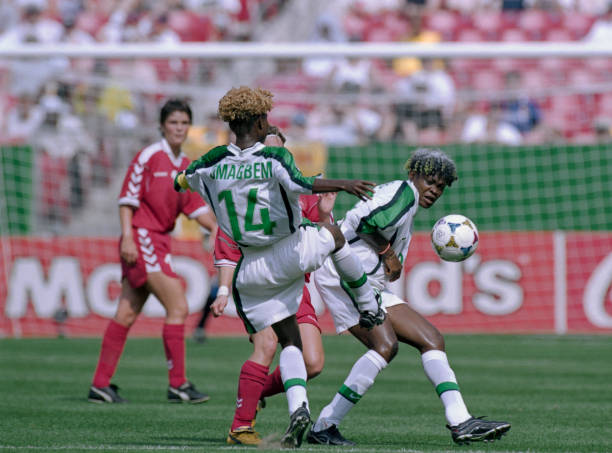
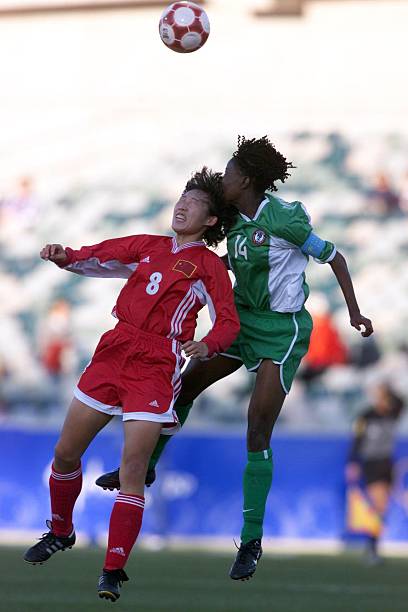
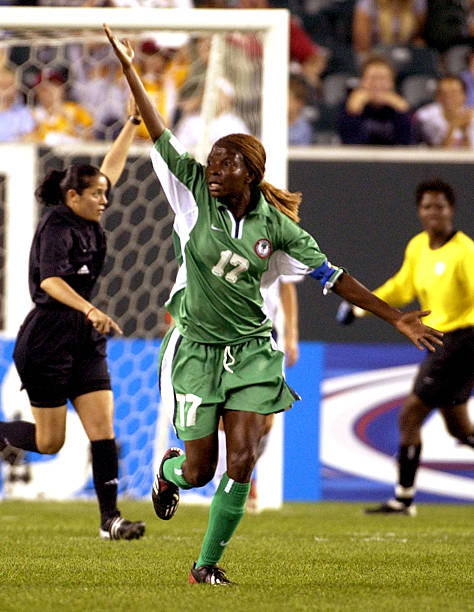
As captain, Omagbemi stood at the heart of Nigeria’s dominance on the continent. Under her leadership, the Super Falcons didn’t just win, they ruled. From 1998 to 2004, she guided the team to multiple titles at the Women’s Africa Cup of Nations, cementing Nigeria’s status as Africa’s undisputed powerhouse. Each victory reinforced a culture of excellence, discipline, and belief, values she embodied every time she stepped onto the pitch.

But her leadership extended beyond Africa.
At the 1999 FIFA Women’s World Cup, Omagbemi captained Nigeria to a historic quarterfinal finish, the country’s best-ever performance on the global stage. That tournament delivered one of football’s most unforgettable moments: a dramatic 4–3 extra-time victory over Brazil.
It was more than a win, it was an announcement.
Nigeria, and African women’s football, had arrived.
While many great players fade after retirement, Omagbemi’s story was only entering a new chapter.
Transitioning into coaching, she stepped into a space where female leadership remained rare, especially at the highest level. Yet, true to her nature, she didn’t just participate, she excelled.
In 2016, at the Women’s Africa Cup of Nations in Cameroon, Omagbemi achieved what no African woman had done before.
She won it all, again.
This time, not as captain, but as head coach.

Guiding a new generation of Super Falcons, she built a team defined by unity, tactical discipline, and resilience. Against a determined host nation in the final, Nigeria held firm before Desire Oparanozie delivered the decisive goal in a tense 1–0 victory.


With that triumph, Omagbemi etched her name into history as the first woman to win the tournament as both player and coach.
She has played a key role in developing the next generation, contributing to the growth of Nigeria’s youth teams and mentoring players who now carry the Super Falcons’ legacy forward.
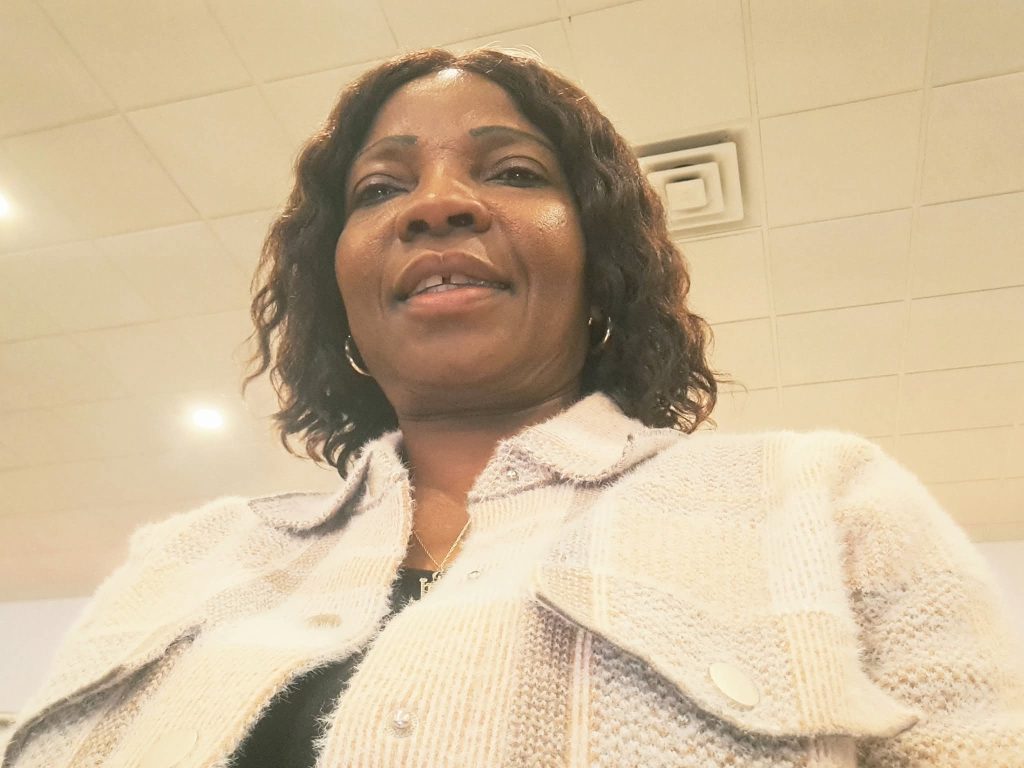
Her work with younger squads reflects a deeper mission, to ensure the future of Nigerian women’s football remains as strong as its past.
Off the pitch, she continues to invest in grassroots development, supporting young talents and giving back to the system that shaped her. Whether through equipment donations or mentorship, her commitment remains unwavering.
In 2017, her excellence was recognized on the global stage with a nomination for The Best FIFA Women’s Coach Award, yet another milestone in a career defined by firsts.

Today, Florence Omagbemi remains a towering figure in African football, respected, influential, and deeply inspirational. Though she may not always be in the spotlight, her presence is felt in every stride of progress the women’s game continues to make in Nigeria.
Her journey tells a bigger story, one of courage in the face of limitation, leadership in moments of pressure, and legacy built not just on victory, but on impact.
For every young girl lacing up her boots with dreams of wearing the green and white, Omagbemi’s story is proof that greatness is possible, not just on the pitch, but beyond it.